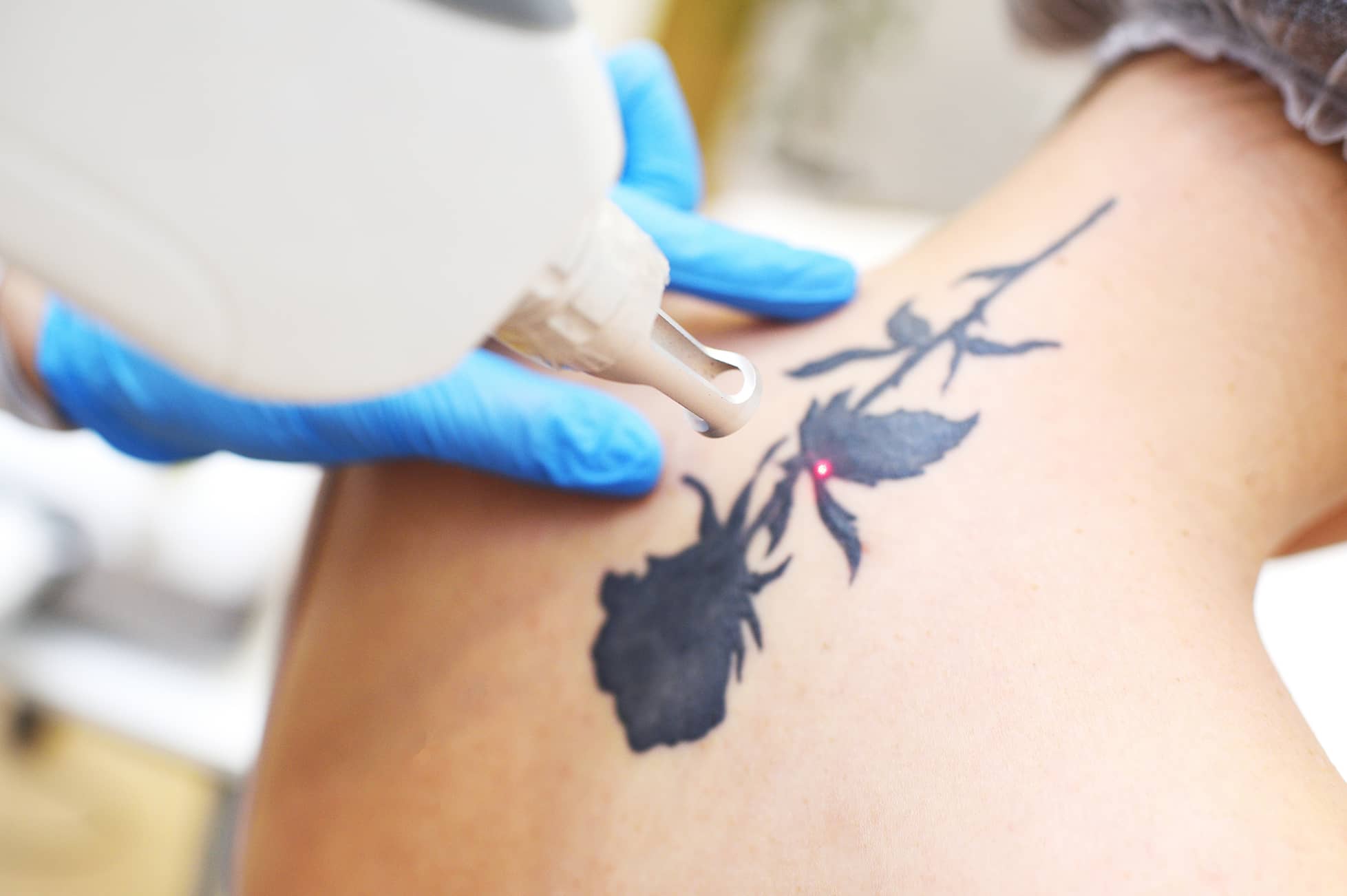
Tattoo removal is nowadays a particularly common aesthetic–dermatological procedure, as many people wish to remove a design that no longer expresses them. Today, modern laser technology offers the possibility of gradual and targeted breakdown of the pigments of the tattoo. It is an extremely safe technique, which provides very good aesthetic results.
How does laser tattoo removal work?
Laser tattoo removal is based on the principle of selective photothermolysis. The laser emits short pulses of high energy, which selectively target the particles of the pigment within the skin, without causing extensive damage to the surrounding tissues. The energy is absorbed by the ink and breaks it down into smaller fragments. Then, the body gradually removes these microscopic particles through the lymphatic system. This is also the reason why the result is not immediate, but develops progressively in the weeks following each session.
The effectiveness of the treatment is influenced by the type of laser and the wavelength used, as each color responds differently. Modern Q-switch systems and newer generation Pico laser devices allow for more targeted and effective breakdown of the pigment, with a lower thermal load on the skin. Black ink is usually removed more easily. Multicolored tattoos with colors such as green or light blue require more sessions and more specialized equipment.
How many sessions are needed?
Tattoo removal is a process that takes time, and the number of sessions is not the same for everyone. There are cases of patients who need only 3–4 sessions, while others require more repetitions. This depends on various factors, which the dermatologist must evaluate before the start of the treatment.
A decisive role in the effectiveness of the removal treatment is played by the color of the tattoo. Black and dark colors in general respond better to the treatment. Shades such as green, light blue or yellow are more resistant. Equally important is the depth and the density of the ink as well as the time when the tattoo was performed. The more recent the tattoo is, the better the response to the treatment.
The size and the area of the body where the tattoo is located also play a significant role. Areas with good blood circulation, such as the torso, often require fewer sessions compared to the extremities. Finally, the type of the skin and the ability of the body to remove the broken-down pigment through the lymphatic system play a significant role in the speed and the effectiveness of the treatment.
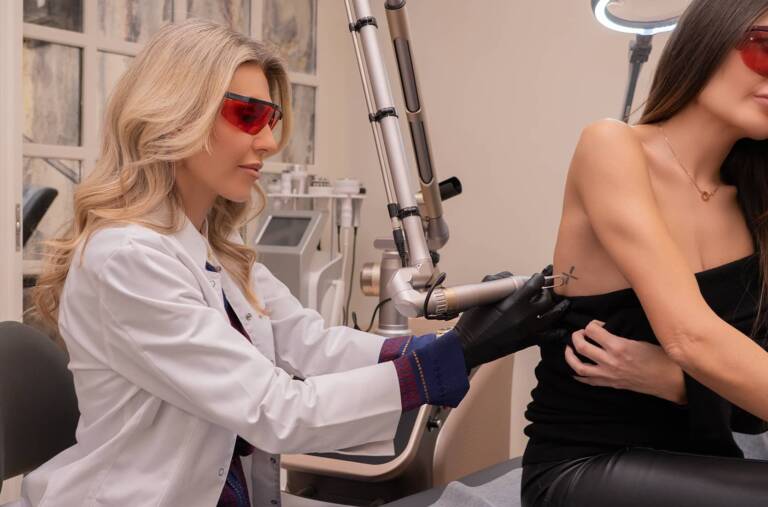
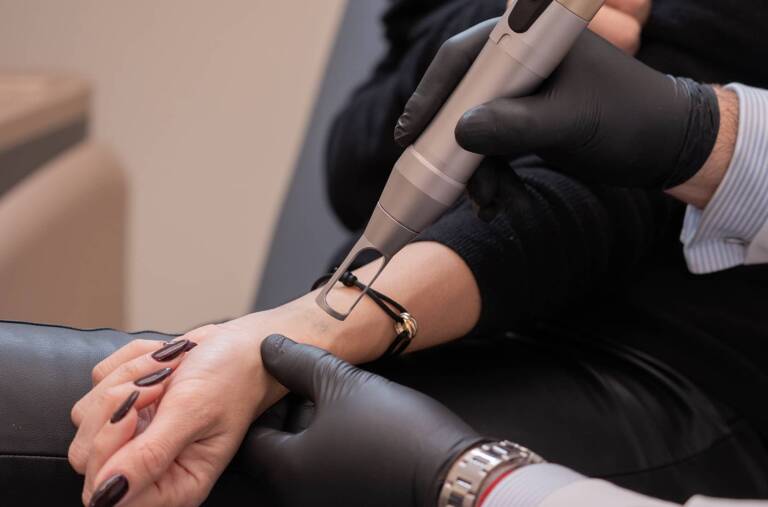
Laser Tattoo Removal: Procedure
Laser tattoo removal is a process that follows specific stages, aiming for the best possible aesthetic result with the highest possible safety. More specifically, the steps followed by the dermatologist in tattoo removal are as follows:
- Medical evaluation and treatment planning: Before any application, the physician will perform a detailed clinical examination of the area. They will assess the size of the tattoo, the colors, the depth, and the area where it is located. At this stage, the physician will also be able to provide a more realistic estimate of the number of sessions the patient will need.
- Preparation of the area: On the day of the session, the area is thoroughly cleaned. If necessary, the physician will apply a topical anesthetic cream for greater comfort, especially in large or sensitive areas. With proper preparation, the patient will feel more comfortable during the removal.
- Laser application: The physician applies the laser with targeted pulses over the tattoo. The sensation most commonly described is a brief “snap” or mild stinging. The duration of the session depends on the size of the tattoo and usually ranges from a few minutes to about half an hour. During the application, the patient will notice that the area appears whiter, which is expected in such a treatment.
- Immediate post-treatment care: After the session, redness, mild swelling, or sensitivity may appear in the area. These symptoms are normal and subside gradually. The physician will provide certain instructions and advice, such as the use of a special cream and avoiding sun exposure.
Sessions are usually repeated every 6 to 8 weeks. This interval allows the skin to heal fully and the body to eliminate the broken-down pigment before the next application.
Results
Laser tattoo removal causes a gradual fading of the design after each session, as the pigment breaks down and is naturally removed by the body. This result is not immediate, but develops progressively over the following weeks. In most cases, the tattoo disappears completely. Designs that meet the criteria have higher chances of completely disappearing within the weeks during which the treatment lasts.
Dr. Athanasios I. Pavlidis, Dermatologist – Venereologist, Director of the Dermatology Department at Errikos Dunan Hospital Center and founding member of AI Derma Clinic, holds a specialized Master’s degree in Laser applications and has many years of experience in their modern use. Dr. Konstantina Mamali, Dermatologist – Venereologist with international training in Germany and certifications in Laser use and dermatosurgery, provide comprehensive evaluation and a personalized treatment plan, with emphasis on patient safety and optimal aesthetic results.
Contact the team at AI Derma Clinic in the center of Athens to receive responsible information and plan the treatment that meets your individual needs, with the assurance of experience and scientific expertise.